
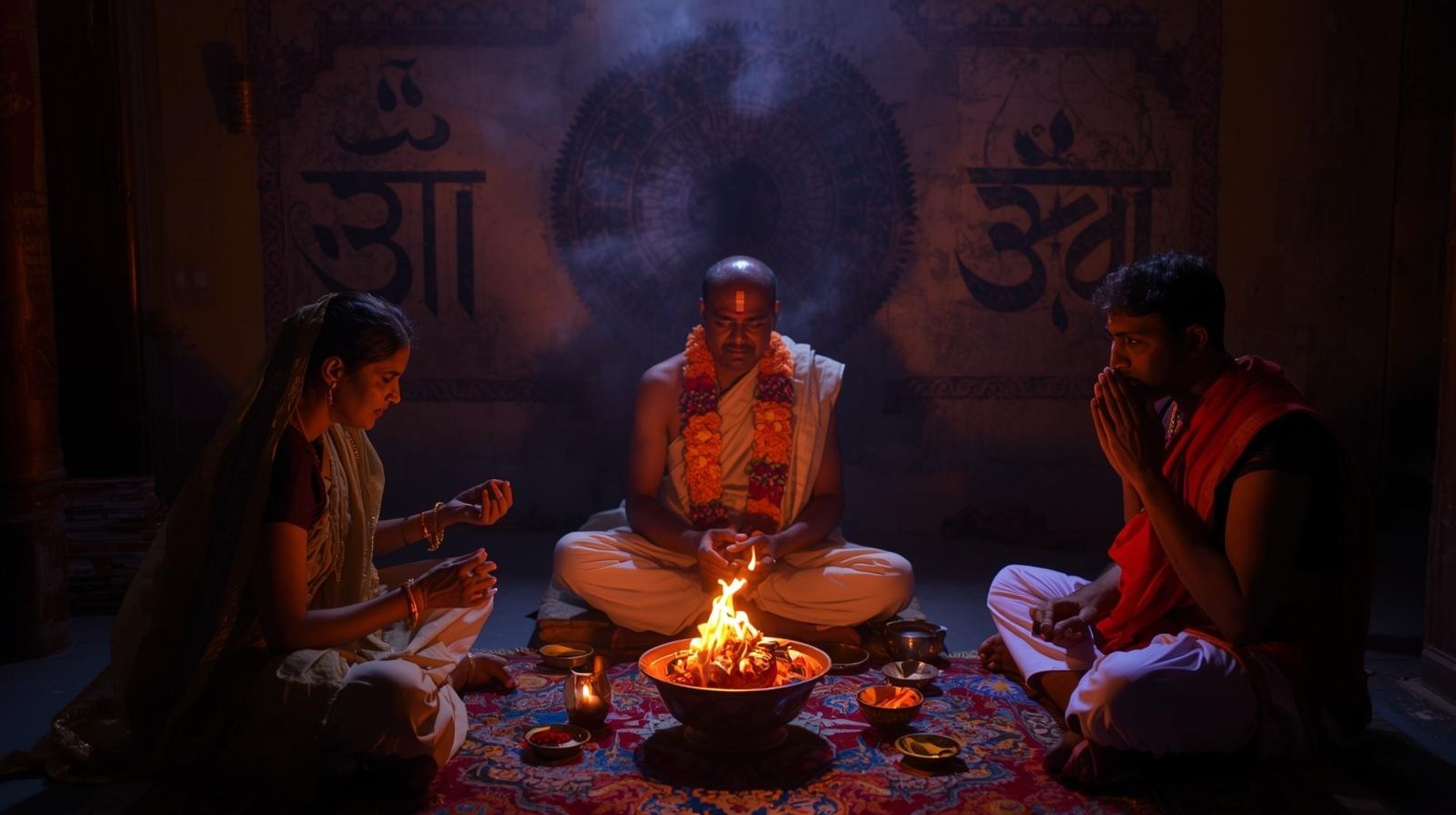
Tripad Shanti
Tripad Shanti in Hindu Tradition
Tripad Shanti is a ritual performed in Hindu tradition when a death occurs under the Tripad Nakshatra. It is prescribed to pacify the dosha associated with Tripad Nakshatra and to ensure peace for the departed soul as well as ritual purity for the family.
Tripad Shanti is mentioned in traditional Dharmashastra practices and is commonly followed in regions such as Maharashtra, Gujarat, and northern India.
Meaning of “Tripad Shanti”
Tripad – A specific division or phase of certain Nakshatras considered inauspicious for death rites
Shanti – Pacification ritual
Thus, Tripad Shanti refers to a pacification ritual performed to neutralize the dosha arising when death occurs in Tripad Nakshatra.
When Tripad Shanti is Performed
When a person passes away under Tripad Nakshatra
The ritual is generally performed on the eleventh day (Akarava) after death
It is conducted as part of post-death rites along with other prescribed rituals
Purpose of Tripad Shanti
The ritual is performed for the following purposes:
To remove the dosha associated with Tripad Nakshatra
To ensure peace and proper transition of the departed soul
To prevent negative effects on family members
To restore ritual balance and purity
Rituals Performed in Tripad Shanti
Common elements include:
Sankalp: Resolution for removal of Tripad dosha
Mantra Japa: Chanting of prescribed Vedic mantras
Homam (Havan): Fire ritual for purification
Pind Daan / Tarpan: Offerings for the departed soul
Daan (Charity): Prescribed donations in the name of the deceased
Difference Between Janan Shanti and Tripad Shanti
Janan Shanti relates to birth Nakshatra dosha
Tripad Shanti relates to death Nakshatra dosha
Both aim at pacification but are performed in different life contexts
Spiritual Significance
Tripad Shanti holds deep spiritual importance:
It ensures spiritual peace for the departed soul
It removes lingering ritual impurity
It protects the family from Nakshatra-related afflictions
Important Places for Tripad Shanti
Tripad Shanti is commonly performed at sacred places such as:
Ramkund (Nashik)
Trimbakeshwar (Maharashtra)
Gaya (Bihar)
Varanasi (Kashi)
Other Puja:
Puja at Nashik: