
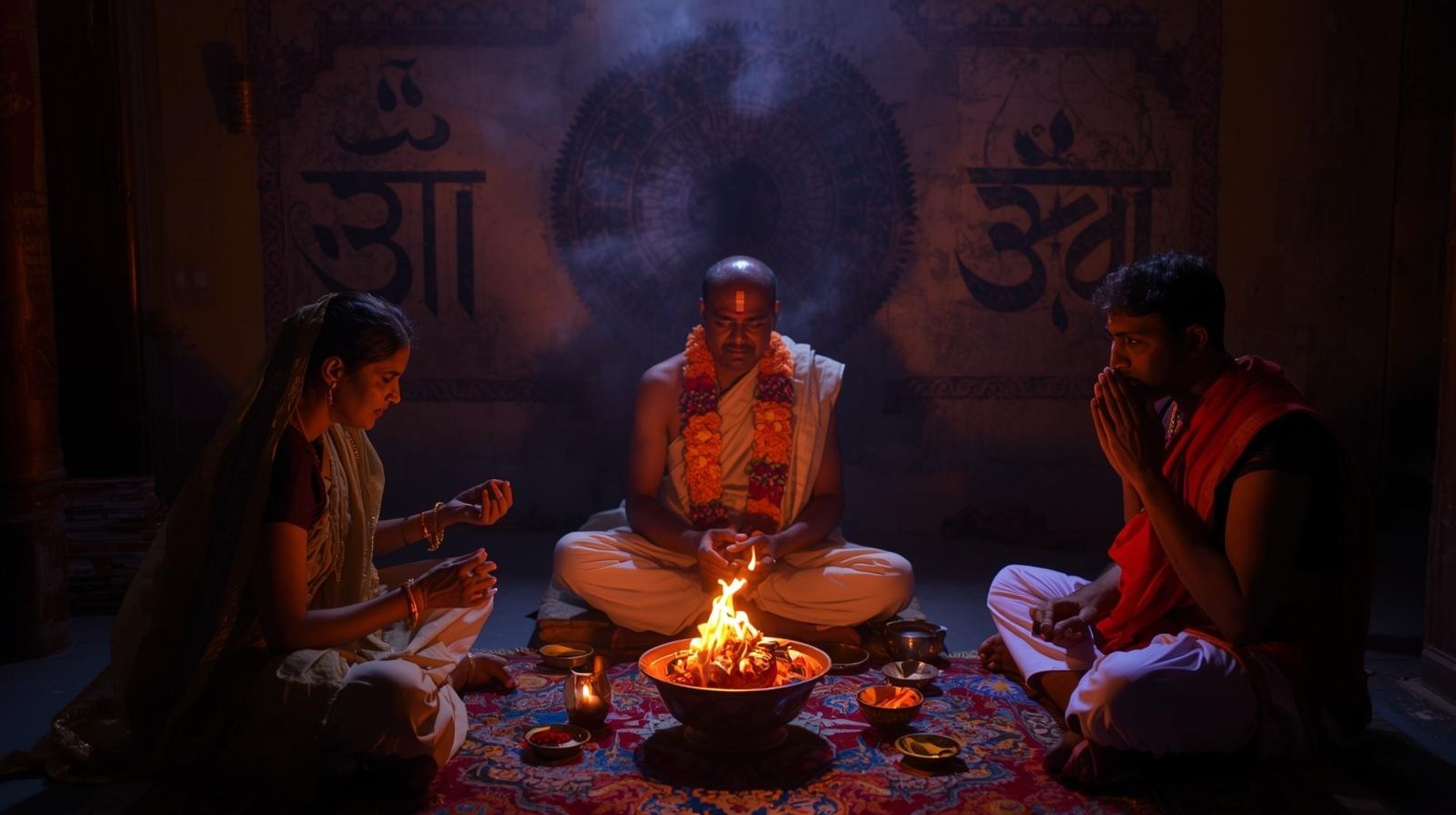
Mangal Shanti
Mangal Shanti in Hindu Tradition
Mangal Shanti is a Hindu ritual performed to remove or pacify Mangal Dosha (Kuja Dosha) present in a person’s birth chart (Janma Kundali). Mangal Dosha arises when the planet Mars (Mangal) is positioned in certain houses, which is believed to cause delays or difficulties in marriage, health, relationships, and prosperity.
This ritual is prescribed in Vedic astrology (Jyotish Shastra) and is widely practiced across Maharashtra, Gujarat, and other parts of India.
Meaning of “Mangal Shanti”
Mangal – The planet Mars
Shanti – Pacification or remedial ritual
Thus, Mangal Shanti means a ritual performed to reduce the adverse effects of Mars in the birth chart.
When Mangal Shanti is Performed
Mangal Shanti is performed when:
Mars is placed in the 1st, 4th, 7th, 8th, or 12th house of the birth chart
The person is identified as Manglik
Before marriage or important life events
As advised by an astrologer
Purpose of Mangal Shanti
The ritual is performed to:
Remove or reduce Mangal Dosha
Prevent delays or conflicts in marriage
Improve harmony, health, and stability
Balance the energy of Mars
Rituals Performed in Mangal Shanti
The ritual typically includes:
Sankalp: Resolution to perform Mangal Shanti
Mangal Graha Puja: Worship of planet Mars
Mantra Japa: Chanting of Mangal mantras
Homam (Havan): Fire ritual for purification
Daan (Charity): Donations such as red cloth, lentils, or food
Difference Between Mangal Shanti and Other Shanti Rituals
Mangal Shanti addresses Mars-related dosha
Kaal Sarp Shanti addresses serpent yoga
Yog Shanti addresses multiple yogas
Janan Shanti is performed at birth
Spiritual Significance
Mangal Shanti helps to:
Neutralize aggressive planetary influences
Promote marital harmony and peace
Remove karmic obstacles
Strengthen positive outcomes in life
Important Places for Mangal Shanti
Mangal Shanti is commonly performed at:
Trimbakeshwar (Nashik)
Ramkund (Nashik)
Ujjain (Mahakaleshwar)
Varanasi (Kashi)
Other Puja:
Puja at Nashik: